Fire Risk Assessment Reviews

Once you have completed your fire risk assessment, addressed the significant findings, carried out your training and evacuation drills then logged everything in your fire logbook and put your feet up, then it’s probably gotten back round to the time for you to review your assessment.

There are no hard and fast rules for time scales in which to do this but most people would be looking to work on an annual review basis. This will vary by premises but a company with high-risk production processes or an expanding workforce and continually developing work site will be looking to review their fire risk assessment on a much more frequent basis than the small low-risk office block.

Whatever the size of your business your current Fire risk assessment should have identified an appropriate review period for you to revisit your original document and update it as necessary. So don’t delay, do it today because it will take less time than you think and it will be a lot less painful than a fire safety audit by the local fire authority.

Fire Risk Assessments – Sheffield Sheffield Fire Risk Assessments

Fire Risk Assessments – Leeds Leeds Fire Risk Assessments

Avoiding Electrical Fires: South Yorkshire Fire and Rescue

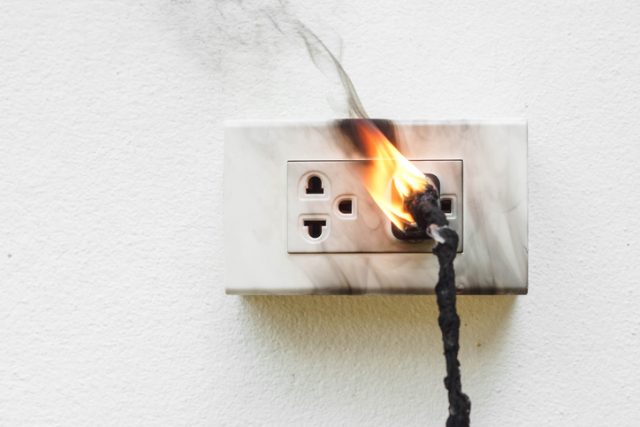
When carrying out fire risk assessments time after time we come across the misuse of electricity and electrical items.

This video posted by South Yorkshire fire and rescue gives simple straight forward advice to help avoid electrical fires:

Fire Risk Assessments – Sheffield

Fire Risk Assessments – Leeds

Disregard for Fire Safety Puts Diner’s Lives at Risk

A restaurant in Devon is undergoing prosecution after failing to meet fire safety guidelines. The offences highlight a failure ‘to make a suitable and sufficient assessment of the risks’ and effective planning.

They also point to inadequate means of escape, fire doors wedged open, combustibles stored by the escape, no up-to-date log books, faulty fire alarm, and employees not having safety training.

Read the full article: https://www.devonlive.com/whats-on/whats-on-news/exeter-restaurant-put-diners-lives-3382294

Charging Electrical Items: An Unexpected Fire Hazard

When conducting a fire risk assessment, identifying potential sources of ignition is one aspect that is equally applicable to the work or the home environment.

Charging electrical items is an everyday task that does not involve much thought. Unfortunately, this is a process that often has unpleasant results.

There have been a number of fires in recent years caused by charging electrical items. The cause may be due to the use of non-manufacturer supplied chargers or simply a fault in the equipment itself but the end result could be a fire that severely damages your workplace or home.

The answer to the problem is relatively simple: where possible always use manufacturer supplied chargers, don’t overload your electrical sockets and, if using an extension cord, ensure it meets the relevant British standard.

Be aware of your battery levels and plan when you might need to recharge your appliance. Ensure you will be around when you charge your electrical items, then, if anything happens, you can be on hand to deal with it.

Helping Manage Fire Safety at Sheffield Manor Castle

Our work this week included helping out our partner, the community interest company Green Estates, who manage the Sheffield Manor site and needed to renew their license for the Turret House as a marriage venue.
This lodge was built in the 1500’s by the Earl of Shrewsbury in the then Deer Park. Constructed as a hunting lodge come observation tower it had far-ranging views over the surrounding countryside.
Sheffield Manor castle is also famous for holding Mary Queen of Scots prisoner as well as Cardinal Wolsey. Today the Turret house is the only building left fully intact on the manor house site and is well worth a visit on one of the open days.

Recent Landlord Prosecutions Highlight the Need for Pro-active Attitude to Fire Safety

A landlord in Colchester was found guilty of breaching HMO regulations and compromising the safety of his tenants earlier this month.

A blocked fire escape and exposed electrical wiring were some of the many breaches found.

It is the duty of all landlords to ensure safe living conditions for their tenants. Property owners should also know that prosecutions and fines occur when safe standards are not met.

Whilst all properties should be outfitted to ensure suitable fire safety for all tenants, HMO properties should also have a risk assessment conducted by a competent person to meet legal requirements.

More information on the case can be viewed here: https://www.fia.uk.com/news/fire-safety-faults-at-hmos-ends-in-fines.html