A lucky escape!

A friend, Kay Hudson, recently posted on her Facebook page (posted with her permission):

‘Stupidly forgot to snuff my candles out last night! Luckily smoke alarm woke me up in the early hours to put it out before it got worse 😳
Only yesterday I moved my mandala from the window sill so I could see the birds in the plum tree, that would have been perfect fire lighting to the curtain!!
Don’t forget to put out your candles after meditation’

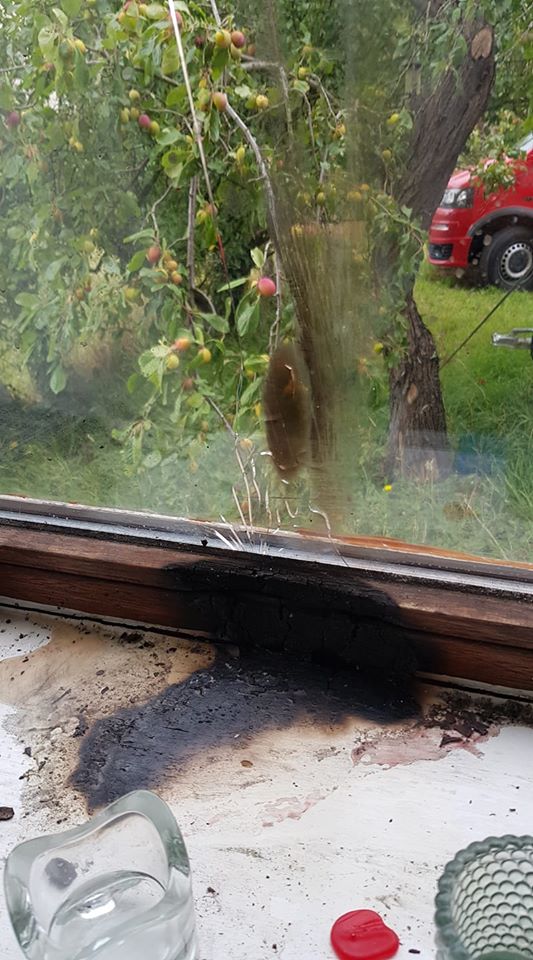
As you can see from the photograph below the damage was minimal and it was fortunate she had moved the hanging decoration from above the candle.

Please remember to test your smoke alarm every week and have an evening bedtime routine to ensure that everything is turned off before you retire for the night.


116868422_2576552679324201_2486227014814957733_o

Fire Risk Assessment Reviews

Once you have completed your fire risk assessment, addressed the significant findings, carried out your training and evacuation drills then logged everything in your fire logbook and put your feet up, then it’s probably gotten back round to the time for you to review your assessment.

There are no hard and fast rules for time scales in which to do this but most people would be looking to work on an annual review basis. This will vary by premises but a company with high-risk production processes or an expanding workforce and continually developing work site will be looking to review their fire risk assessment on a much more frequent basis than the small low-risk office block.

Whatever the size of your business your current Fire risk assessment should have identified an appropriate review period for you to revisit your original document and update it as necessary. So don’t delay, do it today because it will take less time than you think and it will be a lot less painful than a fire safety audit by the local fire authority.

Fire Risk Assessments – Sheffield Sheffield Fire Risk Assessments

Fire Risk Assessments – Leeds Leeds Fire Risk Assessments

Avoiding Electrical Fires: South Yorkshire Fire and Rescue

When carrying out fire risk assessments time after time we come across the misuse of electricity and electrical items.

This video posted by South Yorkshire fire and rescue gives simple straight forward advice to help avoid electrical fires:

Fire Risk Assessments – Sheffield

Fire Risk Assessments – Leeds

Disregard for Fire Safety Puts Diner’s Lives at Risk

A restaurant in Devon is undergoing prosecution after failing to meet fire safety guidelines. The offences highlight a failure ‘to make a suitable and sufficient assessment of the risks’ and effective planning.

They also point to inadequate means of escape, fire doors wedged open, combustibles stored by the escape, no up-to-date log books, faulty fire alarm, and employees not having safety training.

Read the full article: https://www.devonlive.com/whats-on/whats-on-news/exeter-restaurant-put-diners-lives-3382294

Fire Safety Advice for the Autumn Months

The nights are drawing in and the weather is turning colder as autumn officially began on Wednesday, September 23. At this time of year, there can be an increase in domestic fires caused by candles, heaters, fireplaces and electric blankets. It’s also the perfect time to test your smoke alarms and carbon monoxide detectors.

With heating systems set to be turned on for the first time in months, now is the ideal time to ensure that your boiler is safe by getting it serviced by a Gas Safe registered engineer.

Poorly maintained gas boilers don’t just represent a fire risk, there is also the risk of carbon monoxide poisoning. Carbon monoxide is a silent killer which seeps into your home without any smell and creates symptoms which can easily be confused with a winter cold. Carbon monoxide detectors will warn people of any danger and every home should have one.

Candles should never be left unattended and should always be put out before you go to sleep. All candles should be stood in a proper holder and never on a flammable surface. They should always be burned on a heatproof surface and always extinguished before you go to bed. It is also important to remember to keep candles away from windows, curtains, children and pets … and that night lights can melt plastic surfaces such as the top of a TV or the side of a bathtub.

Heaters should always be positioned with their backs against the wall and if possible secure them to the wall to prevent them from falling over. Switch heaters off if you’re not in the room and also when you go to bed.

Portable gas heaters should have the cylinders stored and changed outside or in a well-ventilated area. Both gas and paraffin heaters should only be used in well-ventilated rooms. They consume oxygen from the atmosphere and create carbon monoxide. Don’t place heaters near curtains or furnishings and never use them for drying clothes.

All electric blankets should be checked and the best rule of thumb is that if your blanket is more than 10 years-old, or shows any sign of wear and tear then it should be replaced immediately. When anyone buys a new electric blanket make sure it has ‘overheat protection’, which will cut off the electricity if it becomes too hot. All electric blankets should carry the British Standard Kitemark and the British Electrotechnical Approvals Board (BEAB) symbol on them.

Anyone with an open fire should make sure that they use a fireguard and that they have had their chimney cleaned. Also, ensure that all fires are fully extinguished before you go to bed.

Wishing a warm and safe autumn and winter. 
Fire Risk Assessor Prosecuted


South Yorkshire Fire & Rescue has welcomed the prosecution of a fire risk assessor, saying it proves that there are consequences for failing to comply with safety laws.

David Thompson of Toftwood Health & Safety Solutions was fined £750 and ordered to pay a £170 surcharge and £1,000 costs at Sheffield Magistrates Court on 23 August for failing to provide a suitable and sufficient fire risk assessment.

Thompson pleaded guilty to the offence under the Regulatory Reform (Fire Safety) Order 2005. The offence related to a risk assessment carried out at Hexagon student accommodation on Rockingham Lane, Sheffield.

Ashgate Property Developments Ltd had already been fined £36,000 at an earlier hearing for three separate offences relating to the same premises.

In summing up this case, the judge said that competence is knowing when you yourself aren’t able to do something – and that risk assessors should recognise the limits of their experience and expertise.

Area manager Steve Helps, said, “This verdict should serve as a stark warning to building owners that people carrying out fire risk assessments should be competent and able to properly consider all of the risks within buildings, particular where people’s lives could be placed at risk.

“The sentence in this case proves that people will rightly be held to account if risk assessments are found to be insufficient.”

Facts About Fire in the UK

  • In the UK annually there are approximately 200 fire-related deaths. The majority of these occur within the home between 10 pm and 6 am when people are asleep.
  • There are about 37,000 house fires a year in the UK, the majority of which are caused by electrical equipment misuse, mainly cooking appliances.
  • In the year to Sept 2018, 38% of battery-operated smoke alarms did not sound during a fire. The biggest cause? Missing, flat or disconnected batteries.
  • You only have minutes to escape from a house fire – every second counts!
  • Smoke alarms give you advance warning of fire, which results in giving you more time to react. Having a working smoke alarm has been associated with lower casualty rates and reduced damage to your home.
  • With a working smoke alarm, you are 4 times more likely to survive.

Charging Electrical Items Overnight

Further to last week’s blog post, we have found a video highlighting the hazards of charging electrical items overnight.

Wherever possible, charging your devices should be undertaken whilst you are present in case anything should go wrong. Using the branded charging plug helps to reduce risk, and workplaces should strongly consider PAT testing to ensure that all devices are safe for use. No method is fool-proof, but these two measures can help to reduce risk.

Have a good weekend!

https://www.youtube.com/watch?v=ygpFYaLwQyM

Charging Electrical Items: An Unexpected Fire Hazard

When conducting a fire risk assessment, identifying potential sources of ignition is one aspect that is equally applicable to the work or the home environment.

Charging electrical items is an everyday task that does not involve much thought. Unfortunately, this is a process that often has unpleasant results.

There have been a number of fires in recent years caused by charging electrical items. The cause may be due to the use of non-manufacturer supplied chargers or simply a fault in the equipment itself but the end result could be a fire that severely damages your workplace or home.

The answer to the problem is relatively simple: where possible always use manufacturer supplied chargers, don’t overload your electrical sockets and, if using an extension cord, ensure it meets the relevant British standard.

Be aware of your battery levels and plan when you might need to recharge your appliance. Ensure you will be around when you charge your electrical items, then, if anything happens, you can be on hand to deal with it.